
Searching Fayette County Civil Dockets
The court printed on the complaint, summons, notice, or order tells you where to go. Circuit and General Sessions records belong to Circuit Court Clerk Ed Pulliam. Clerk and Master Amy Anderson handles Chancery, probate, and estate matters. Her office also covers divorce, guardianship, adoption, name-change, equity, and tax matters. The elected County Clerk is a separate office. It is not the default keeper of these trial-court dockets.
The county offers no public civil-search form or document-image viewer. A complete, specific request therefore beats a broad name query.
- Copy the court, caption, case number, and filing year exactly from a case paper.
- Call Pulliam at 901-465-5205 for Circuit or General Sessions, or Anderson at 901-465-5219 for Chancery.
- Ask whether the case is active, disposed, dismissed, nonsuited, defaulted, transferred, or appealed.
- Confirm every current setting and later continuance rather than relying on the first notice.
- Request the named public pleading, order, judgment, or docket sheet as a plain or certified copy.
- If no record is found, check the other civil clerk, municipal court, juvenile route, archive, or appellate number.
Two Fayette County Civil Clerks
Civil custody in Fayette County splits by court. At 705 Justice Drive in Somerville, Pulliam's office keeps the Circuit and General Sessions records. Anderson's office, at 16755 Highway 64, Suite 210, Somerville, holds the Chancery and Clerk-and-Master files. Both offices are open weekdays from 8:30 a.m. to 4:30 p.m.
The split matters. A correct party name can still draw a blank at the wrong counter. So give the clerk the court name first, then the case number and party roles. Mail works too, once the clerk confirms the address, price, return-envelope needs, and accepted payment. County sources publish email and fax details. But an informal message does not necessarily start a formal request, so ask which channel the office accepts. Visitors should also ask whether in-office inspection or a public workstation is available. The county posts no terminal policy.
Inside a Fayette County Civil Docket
The official court materials support a practical field inventory. A docket line records that an event occurred. It usually does not reproduce the pleading or the judge's reasons.
| Identity | Court, division, case number, filing date, caption, parties, and attorney names. |
|---|---|
| Opening | Complaint or petition, summons or citation, issuance, return, service, waiver, or publication. |
| Responses | Answer, motion to dismiss, counterclaim, crossclaim, and amended pleading. |
| Management | Discovery, scheduling order, mediation, motion hearing, continuance, or docket call. |
| Result | Agreed or default judgment, nonsuit, dismissal, trial, final decree, costs, or appeal. |
| After judgment | Execution, garnishment, levy, satisfaction, reopened case, or record preparation. |
When the exact wording matters, ask for the filed paper itself. A motion-filed entry does not show that it was granted, and a setting does not prove the hearing occurred.
Fayette County Civil Request Fields
A clerk request works best when it narrows both the file and the desired result. Keep the case number's punctuation and letters as they appear instead of assuming a statewide format.
| Field | Why it helps | Fayette status |
|---|---|---|
| Court or division | Separates Circuit, Chancery, and General Sessions. | No public web selector located. |
| Case number | Provides the most precise key. | Copy it from an official case paper. |
| Caption and roles | Supports a name search. | Give plaintiff, petitioner, defendant, or respondent roles. |
| Filing year | Narrows common names and archives. | Ask the clerk to confirm. |
| Named document | Identifies the complaint, order, judgment, or satisfaction. | Choose plain or certified. |
Civil Case Types on the Docket
Civil does not identify one Fayette County court. The claim type and the originating court determine both the docket and its keeper.
- Circuit Court hears major general civil claims and lower-court appeals.
- General Sessions handles locally authorized limited claims, small claims, and detainer matters; confirm the local dollar ceiling.
- Chancery handles equity, divorce, probate and estates, guardianship, adoption, name changes, and tax litigation.
- Juvenile and some family matters follow restricted-access rules and should not be treated as ordinary public files.
- Municipal courts handle city ordinance and traffic citations, not ordinary private contract or property cases.
Fayette-specific jurisdictional variations should come from the clerk, not a generic statewide limit.
Reading Fayette County Civil Outcomes
Disposition terms are clues, not substitutes for the order. A default may follow a failure to respond. A nonsuit, though, is not the same event as a merits judgment. A dismissal for want of prosecution, sometimes shortened to DWOP, differs again. Settlement, agreed judgment, transfer, appeal, and satisfaction can each add later entries.
- Service
- Delivery or legally recognized notice of initiating papers; filing alone does not prove service.
- Continuance
- An order moving a setting; it does not dismiss the civil action.
- Final decree
- A Chancery resolution whose controlling terms are in the filed decree.
- Satisfaction
- A post-judgment entry that may address an obligation; confirm the filed instrument.
Request the latest docket plus the controlling judgment or decree. An older final-looking line may be followed by amendment, costs, appeal, or satisfaction.
Civil Docket Settings and Hearings
A Fayette County civil docket may list a motion hearing, status conference, docket call, or mediation. Pretrial conferences, bench trials, and jury trials show up there too. Read each date with the courtroom, judge, setting type, and every later reset. The county publishes no standalone trial-court calendar. The summons, scheduling order, and clerk are primary sources. The Fayette County court dates guidance explains the calendar fallback. It does not treat an old notice as current.
When a Fayette County Civil Search Fails
An empty online result does not prove the case is gone. Fayette County has no verified public trial docket viewer. The matter may sit in a different clerk's system, on paper, archived, sealed, transferred, or indexed under another number.
- Recheck the court heading and exact number on the newest paper.
- Try the matching clerk with both party roles and an approximate filing year.
- Ask whether the case moved from General Sessions to Circuit or became an appeal.
- For Chancery subjects, contact Anderson rather than the Circuit desk.
- Ask whether a public redacted record exists when part of the file is restricted.
Civil Docket Access Rules
Tennessee court records start with a presumption of access. Law, court rules, and case-specific orders still protect some material. Expect redaction or restricted access for juvenile information, adoptions, sealed filings, protected identifiers, and certain sensitive family records.
Public access has limits.
Tennessee Supreme Court Rule 34 governs public access and identifies confidential categories.
Tennessee Rule of Civil Procedure 43.01 preserves public access when proceedings use remote technology.
A Tennessee Public Records Act request identifies an existing record. It cannot force a custodian to create a new report. Ask for the releasable redacted version and the authority for any withheld portion.
Fayette County Civil E-Filing Limits
Tennessee Rule 5B defines electronic filing and lets several trial-court clerks adopt it by local rule.
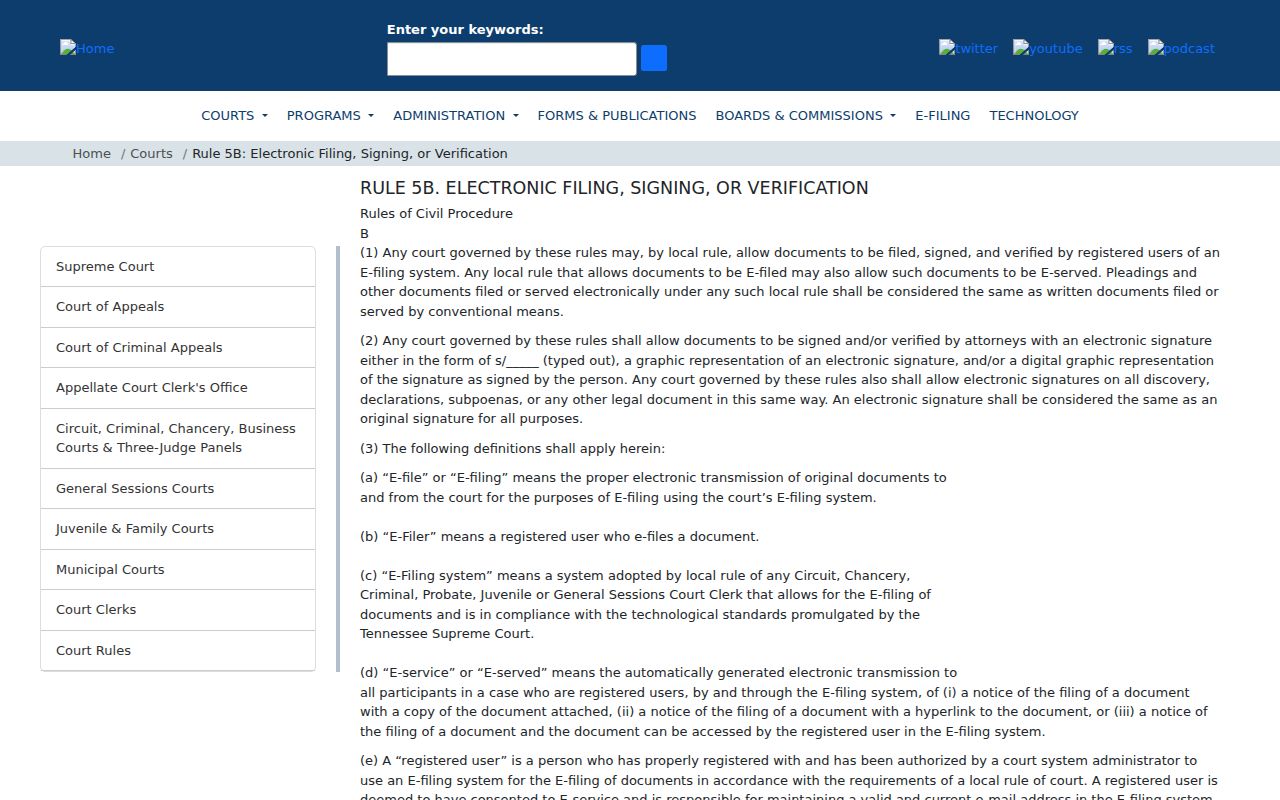
The rule page documents statewide authority only. It does not prove that Fayette County offers a public filing login or a docket viewer. It does not promise instant access to a new filing either. The county posts no public e-filing or trial-docket viewer. TnCIS may support clerk case management. But official materials do not present it as one public county search. A filer should ask the correct clerk whether a local electronic process applies. A public searcher should still use the clerk channels. Request the named docket entry or paper.
Fayette County Civil Routing Matrix
A Fayette County civil request gets sharper when the source, question, and expected result all name the court involved. That is the point of the matrix. It keeps each Fayette County inquiry tied to a supported custodian rather than a generic office.
| Fayette County source | Fayette County question | Fayette County result |
|---|---|---|
| Fayette County Circuit paper | Which Fayette County Circuit number applies? | Ask the Fayette County Circuit clerk. |
| Fayette County General Sessions paper | Is the Fayette County claim still in General Sessions? | Confirm with the Fayette County clerk. |
| Fayette County Chancery paper | Is this a Fayette County equity case? | Use the Fayette County Clerk and Master. |
| Fayette County probate paper | Which Fayette County estate file applies? | Use the Fayette County Chancery route. |
| Fayette County summons | Was Fayette County service returned? | Request the Fayette County service entry. |
| Fayette County motion | Was the Fayette County motion ruled on? | Request the Fayette County order. |
| Fayette County setting notice | Is the Fayette County date current? | Confirm the Fayette County reset history. |
| Fayette County judgment | Is the Fayette County judgment final? | Check the Fayette County later entries. |
| Fayette County dismissal | What did the Fayette County order state? | Request the Fayette County filed order. |
| Fayette County appeal notice | Did the Fayette County number change? | Ask for the Fayette County appeal route. |
| Fayette County archive request | Is the Fayette County file stored off-site? | Ask the Fayette County custodian. |
| Fayette County copy request | Does the Fayette County user need certification? | Choose a Fayette County plain or certified copy. |
| Fayette County restricted file | What Fayette County material is public? | Ask for the Fayette County releasable portion. |
The matrix adds nothing new to Fayette County jurisdiction. It simply lays out the clerk split and the Fayette County docket fields the official sources already set out.
Fayette County Civil Copies
Fayette County Civil Copies. The statewide court-clerk chart dated Jan. 1, 2026 sets $0.50 per page for a document request. It adds $5 for certification or a seal. Treat it as a reference, not proof. It does not confirm every Fayette County mailing, archive, or municipal charge. Ask the clerk about page count, delivery charge, payment method, and a written estimate.
Inspection, a plain copy, and a certified copy serve different purposes. Another court or agency may need formal proof. Then request the originating clerk's certified judgment or decree instead of a printed docket summary. The clerk publishes no docket-specific certified-copy fee or turnaround, so ask directly. Transcripts move through a separate channel. Tennessee Rule 26 treats official electronic recordings and duplicate media as the record in covered proceedings. So name the hearing date. Ask whether the clerk, a court reporter, or the recording process controls it. A docket can locate the event, but it will not produce a typed transcript.